The Economist: Russia, China, Iran, and North Korea Strengthen Strategic Cooperation
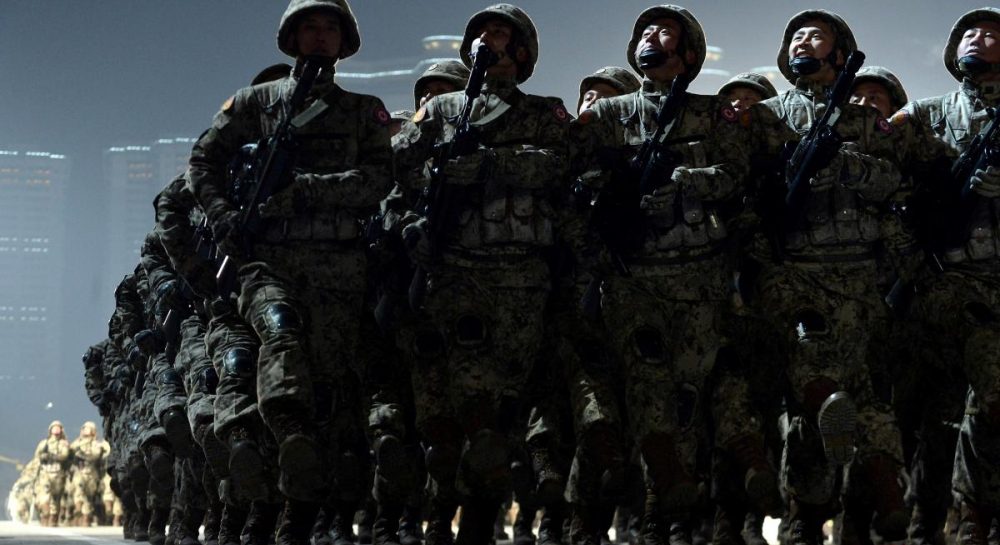
The Economist analyzes the emergence of an informal alliance between four authoritarian states that is reshaping the global security architecture.
 🇺🇦Ukraine
Photo: UNIAN
Key points
- Emergence of an informal four-nation alliance
- Over 600 security cooperation cases since 2019
- High coordination despite the lack of a unified command
A New Geopolitical Reality
International experts are increasingly pointing to the formation of close cooperation between Russia, China, Iran, and North Korea. According to the FDD think tank, over 600 instances of security cooperation between these nations have been recorded since 2019, with the intensity of contacts rising sharply following the full-scale Russian invasion of Ukraine.
While this alliance lacks an institutional structure similar to NATO and does not involve mutual defense obligations, it is becoming increasingly effective. These nations are exchanging military technologies, intelligence, and expertise, allowing them to better circumvent Western sanctions.
Challenges to Global Security
The Economist analysts emphasize that despite internal contradictions—such as differing views on oil market stability—the joint actions of these regimes pose serious challenges to the democratic world. It is becoming harder for the West to contain these actors individually, as they act as a united front in circumventing international restrictions.
Meanwhile, internal debates regarding containment strategies continue in the United States. Specifically, new Pentagon directives limit informal military contacts, while the Donald Trump administration emphasizes the importance of personal diplomatic relationships with the leaders of China and Russia as a tool of influence.
Source UNIAN — unian.ua/world/rosiya-knr-iran-ta-pivnichna-koreya-stvorili-neforma… ↗
Read next
 🧠AI Analysis
Arctic blast: Europe faces temperatures as low as -20°C
Meteorologists forecast a significant cold snap in Central Europe and Ukraine at the end of November due to shifting air masses.
 🏛️Politics
EU Declines Bilateral Moscow Visits: Brussels Insists on Multilateral Peace Format
The European Commission acknowledged the invitation from the Kremlin but emphasized its commitment to collective diplomacy and NATO's role in security talks.
 🏛️Politics
SAP Prosecutor Praises NABU Media Team Amid Criticism Over Investigation Quality
SAP prosecutor Rostyslav Batig highlighted the professionalism of NABU's video editors when questioned about the agency's reliance on PR campaigns instead of solid eviden…
 🧠AI Analysis
NATO Secretary General Mark Rutte rejects Russia's 1997 border demands as unacceptable
NATO chief Mark Rutte firmly dismissed Moscow's calls to roll back the alliance's borders to 1997, calling the demands unacceptable. He also addressed a recent dangerous …
 🛡️Security
DTEK Energy Workers Set Annual Record for Restoring Power After Attacks
Over the course of a week, the company restored electricity supplies to 3.5 million households across several regions of Ukraine.
 🛡️Security
Artificial Intelligence on the Frontline: How Ukrainian Ground Robotic Systems Are Evolving
Ukraine's defense industry is actively integrating artificial intelligence into ground robotic systems (GRSs) to minimize dependence on operators and stable communication…